Grooming · 5 min read
Home Grooming vs Salon Grooming - What’s Safer for Dogs?
Compare home grooming and professional dog grooming safety. Learn risks, benefits, and when expert grooming is the safer choice for dogs.
By Sheena Sankhla, Senior Manager - Brand Communications · Updated
Independent veterinary and platform review pending
A practical, safety-first guide for responsible pet parents
As pet parents, we all want the best for our dogs, not just how they look, but how they feel. Grooming is a regular part of dog care, yet one question often causes confusion:
Is it safer to groom my dog at home, or should I rely on a professional grooming salon?
The truth is, there’s no one-size-fits-all answer. Both home grooming and salon grooming can be safe or risky, depending on factors like your experience, your dog’s temperament, their coat type, and the specific grooming tasks involved.
This guide breaks down the real safety considerations of both options, so you can make informed, confident decisions for your dog.
Grooming Safety: What Pet Parents Should Know
Dog grooming involves sharp tools, sensitive body parts, and animals that may move unpredictably. Because of this, minor grooming-related injuries are relatively common across both home and professional settings.
Veterinary and grooming literature consistently notes that common grooming injuries include:
Nail quick injuries.
Small cuts or nicks.
Clipper irritation or burns.
Eye-area injuries (especially during face trimming).
Ear nicks, which can bleed heavily.
Small breeds and long-haired dogs, particularly those needing face or coat trimming, tend to be more vulnerable if grooming is rushed or improperly handled.
The key difference between home grooming and salon grooming isn’t whether injuries can occur, it’s how risks are anticipated, reduced, and managed.
Home Dog Grooming: Where It Helps and Where It Risks
When Home Grooming Can Be Helpful
A Familiar, Low-Stress Environment
Many dogs feel more relaxed at home. There’s no travel, no unfamiliar sounds, and no strange dogs nearby. For anxious or senior dogs, this familiarity can significantly reduce stress.
Routine Maintenance Between Appointments
Basic tasks like brushing, paw cleaning, or occasional baths help maintain coat health between professional grooming sessions.
Bonding Time
Handled calmly, grooming at home can build trust and strengthen your relationship with your dog.
Cost Convenience
Professional grooming can be an ongoing expense. Home maintenance helps reduce the frequency of full grooming visits.
Safety Risks of Home Grooming
Lack of Formal Training
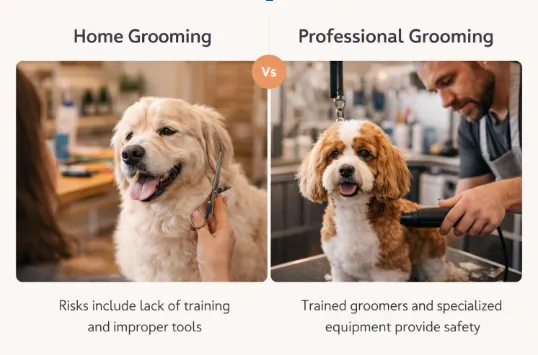
Most pet parents haven’t been trained in canine anatomy, coat structure, or safe restraint techniques. This increases the risk of accidental injuries.
Improper Tools
Dull scissors, incorrect clippers, or human grooming tools can cause pulling, burns, or cuts.
Common Home Grooming Injuries
Nail quick injuries due to difficulty identifying blood vessels
Clipper burns caused by overheating blades or incorrect technique
Cuts while removing mats, where skin is easily trapped beneath tangled fur
Eye and ear injuries during sudden head movement
These injuries are rarely intentional; they usually happen when a dog moves unexpectedly or when the groomer underestimates the task.
When Home Grooming Is Generally Safe
Home grooming works best for:
Brushing with the right tools for your dog’s coat.
Bathing using dog-safe shampoos and lukewarm water.
Paw cleaning and inspection.
Teeth brushing with dog-specific toothpaste.
Light trimming should only be done if you’ve been shown safe techniques by a professional. Face, ear, and full-body trims are best avoided at home without training.
If you’re unsure which grooming tasks are safe to handle at home, a trained groomer can guide you through proper maintenance techniques.
Explore professional dog grooming options →
Professional Salon Grooming: The Safety Advantage
Why Professional Grooming Is Often Safer
Training & Experience
Professional groomers are trained to:
Handle dogs of different temperaments.
Understand breed-specific coat needs.
Use tools safely and efficiently.
Recognize stress signals and pause when needed.
Respond appropriately to minor injuries or emergencies.
Specialized Equipment
Professional salons use:
Non-slip grooming tables.
Temperature-controlled dryers.
Sharp, well-maintained clippers.
Sanitized tools for each pet.
This equipment significantly reduces the risk of burns, slips, and uneven cutting.
Behavior Awareness
Trained groomers know when a dog needs a break and how to adjust handling for anxious, senior, or reactive pets.
Early Health Detection
Groomers often notice skin issues, ear infections, parasites, or unusual lumps early; these things that can go unnoticed at home.
Realistic Risks in Salon Grooming
Professional grooming is not risk-free.
Potential concerns include:
Stress from busy environments.
Poor handling in overcrowded salons.
Rushed appointments.
Inadequate communication about a dog’s medical or behavioral needs.
These risks are significantly reduced in well-managed, safety-focused grooming setups.
What Defines a Safe Grooming Salon
Look for:
Trained, confident groomers who explain their process.
Clean, odor-free spaces.
Proper use of restraints (never harsh or forceful).
Questions about your dog’s health and behavior.
Transparency - no hidden rooms or refusal to answer concerns.
If a groomer avoids questions or rushes interactions, that’s a red flag.
Home vs Salon Grooming: What’s Safer for What?
Best Left to Professionals
Full-body haircuts
Nail trimming
Severe mat removal
Ear cleaning or plucking
Anal gland expression
Breed-specific styling
Generally Safe at Home
Brushing and coat maintenance
Bathing with dog-safe products
Paw care
Dental hygiene
Light trimming with guidance
The Safest Approach: A Balanced Routine
For most pet parents, a hybrid approach is the safest:
Professional grooming every 4–8 weeks.
Home maintenance between visits.
Learning basic grooming care from trained groomers.
This combination keeps your dog comfortable, clean, and safe without unnecessary risk.
When to Stop Home Grooming Immediately
Your dog shows fear, panic, or aggression.
You notice frequent nicks or injuries.
You feel unsure or unsafe performing a task.
Your dog has medical, behavioral, or mobility issues.
When in doubt, safety should always win.
The Bottom Line
Neither home grooming nor salon grooming is automatically safer.
Safety depends on skill, tools, awareness, and knowing your limits.
For most dogs:
Home grooming is best for maintenance.
Professional grooming is safest for complex tasks.
Education and communication reduce risk everywhere.
Your dog’s comfort and well-being matter more than convenience or cost.
Why Pet Parents Trust Bonn-O for Grooming
At Bonn-O, grooming is built on training, safety, and transparency not speed.
✔ Professionally trained groomers
✔ Breed & temperament-aware handling
✔ Clean, safety-first grooming spaces
✔ High-quality equipment
✔ Calm, humane grooming practices
✔ Clear communication with pet parents
We don’t rush. We don’t compromise. We groom with care.
Looking for a safer grooming experience for your dog?
Explore professional grooming at Bonn-O and connect with trained experts who put your pet’s comfort first.
Sources and further reading
- The Veterinarian's Role in Animal Welfare (American Veterinary Medical Association)